


Our Stories
Visiting the West of Ireland in Autumn


Is autumn a good time to visit the west of Ireland? Yes, and in some ways it is the best-kept secret of the travel year here. From late September through November the summer coaches thin out, the light turns long and golden, and the coast, the Burren and Connemara take on colours you simply do not get in July. The trade-off is weather that keeps you on your toes. This guide is honest about both sides, and shows you how to make the most of a shoulder-season trip from Galway.
See the West of Ireland This Autumn. Wild Atlantic Way Day Tours runs guided day trips from Galway to the Cliffs, the Burren and Connemara. The season is quieter and the light is at its best, and a guide handles the driving and the weather – the Cliffs of Moher and Burren day tour from Galway is the one most people start with.
Why Visit in Autumn
Three things make autumn worth it.
Fewer crowds: the peak-season queues at the Cliffs of Moher ease off from mid-September, so you get the big sights with room to breathe, and photos without a hundred other people in the frame.
The light: lower autumn sun rakes across the Atlantic cliffs and the Connemara hills in a way high summer never manages. It is the season landscape photographers actually choose.
Autumn colour: Connemara’s bog, bracken and woodland shift into russet, gold and copper through October, and the Burren’s limestone takes on a warmer tone against low skies.
The catch is that daylight shortens quickly and the weather gets less predictable, which is exactly where a bit of planning, and a guided day tour, pays off.
Weather and What to Pack
Autumn in the west of Ireland is mild but changeable. A rough guide: September is the mildest of the three, with daytime highs typically around 15 to 17°C and reasonably long evenings early in the month. October cools to roughly 12 to 14°C, with noticeably shorter days and more rain and wind rolling in off the Atlantic. November has a properly autumnal-into-winter feel, often around 9 to 11°C.
Daylight drops from about 12 to 13 hours at the September equinox to roughly 8 hours by late November, so plan sightseeing for the middle of the day. Atlantic showers can arrive and clear within the hour, so the golden rule is layers plus a genuinely waterproof jacket, not an umbrella, which the coastal wind will defeat. Add sturdy, grippy footwear for the Cliffs paths and the Burren’s limestone, which is slick when wet.
The upside of all this: changeable skies make for dramatic scenery. A grey morning at the Cliffs often becomes the most memorable weather of a trip.
The Cliffs of Moher and the Burren in Autumn
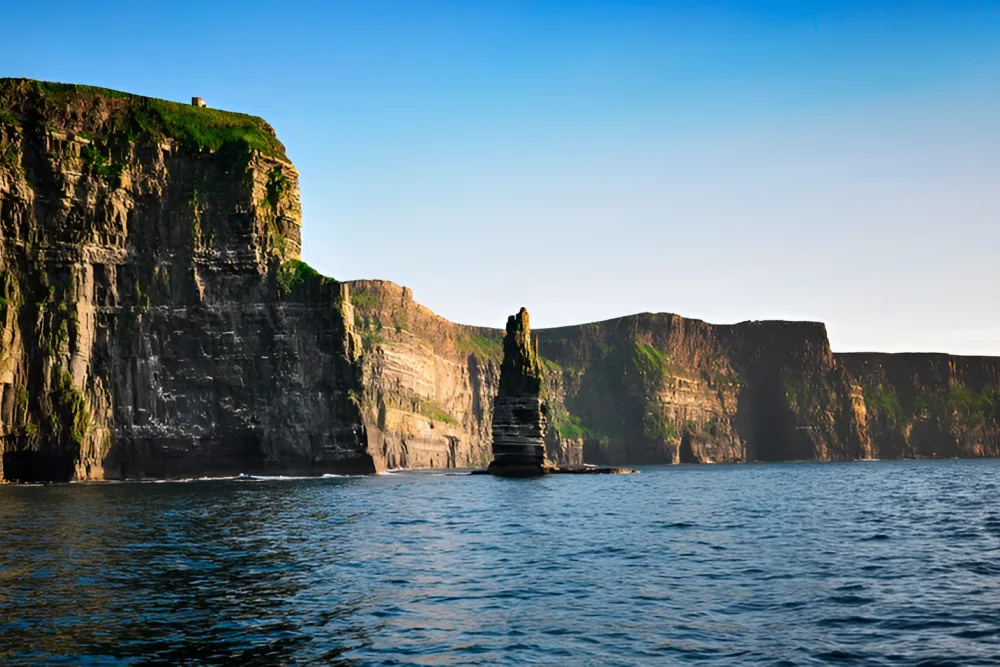
The Cliffs of Moher are spectacular year-round, and autumn strips away the summer bottleneck. On a clear day you will see the Aran Islands and the mountains of Connemara across the bay; on a wild day you will get the full force of the Atlantic against the 214-metre cliff face, arguably the more Irish experience of the two.
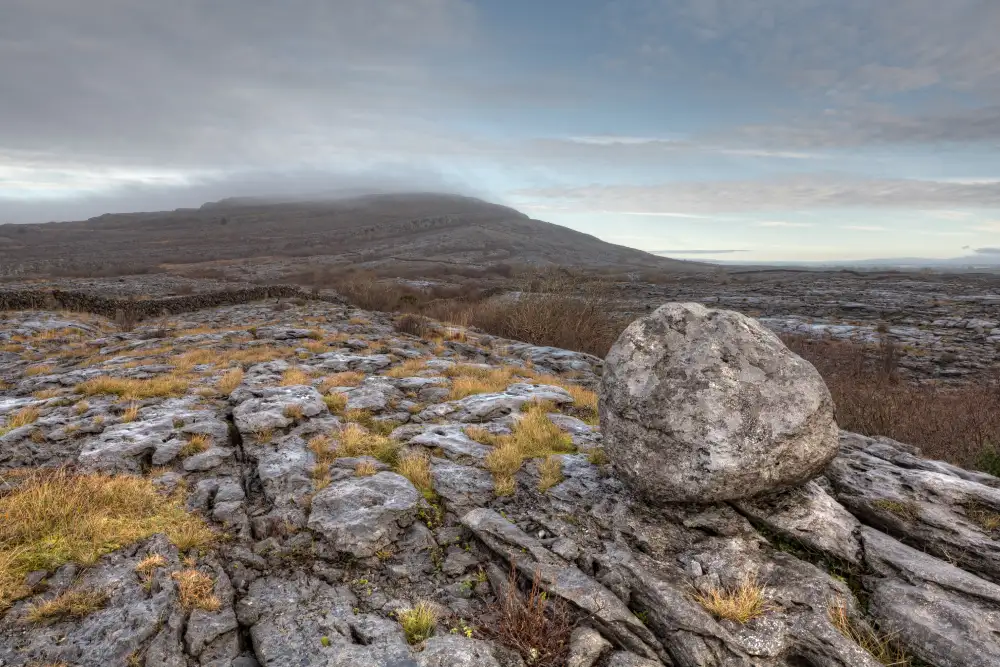
The neighbouring Burren is a highlight people often underrate. Its silver-grey limestone pavement, hidden valleys and ancient sites feel especially atmospheric under autumn’s lower light and quieter roads.
If you would rather not drive unfamiliar coastal routes in changeable weather and short daylight, the Cliffs of Moher and Burren day tour from Galway covers both in a single guided day, with the driving, timing and weather-watching handled for you. For a deeper look at when to go, see our guide to the best time to visit the Cliffs of Moher.
Connemara’s Autumn Colours
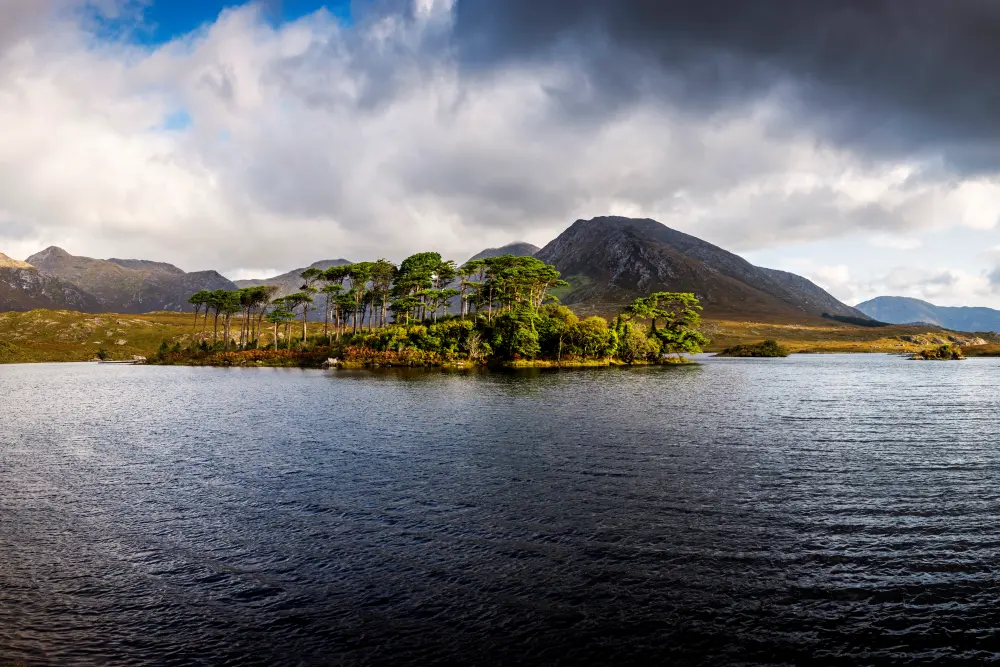
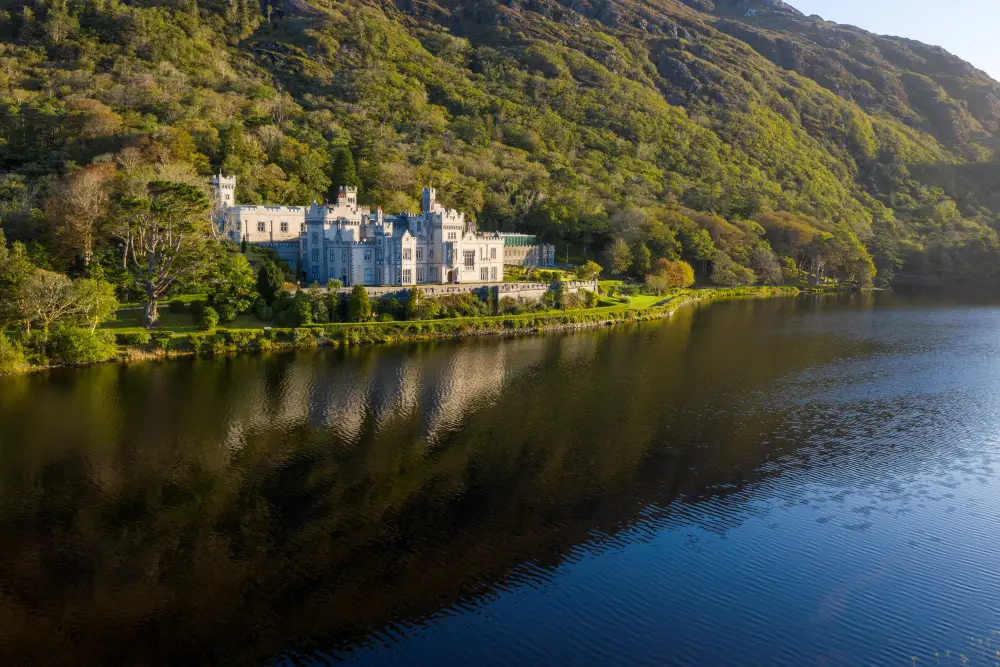
If there is one region that comes into its own in autumn, it is Connemara. Through October the bogland and bracken turn deep russet and gold, the light softens over the Twelve Bens, and the lakes mirror it all on a still day. Kylemore Abbey and its lakeside setting look particularly striking against autumn skies, and the whole region feels calmer once the summer traffic has gone.
The Connemara National Park day tour from Galway is a low-hassle way to see the best of it in a day, useful when autumn daylight is limited and you would rather spend it looking at the scenery than navigating it. If the abbey and its Victorian walled garden are what you are after, the Connemara and Kylemore Abbey day tour from Galway takes those in too, and it runs daily through the season.

Booking a Guided Day Tour in Shoulder Season
Shoulder season is where a guided tour earns its keep. Short daylight, quick-changing weather and quieter public transport all make self-driving more of a gamble in autumn than in summer. A guided day tour means someone else watches the forecast, adjusts the running order for the conditions, and gets you to the best of the coast and the light within the hours you have. Pick-up is in Galway city, and you can see all our day tours in one place to compare dates.
If you are planning an autumn visit, book ahead. Shoulder-season demand is lower than the summer peak, but the best days fill up, and a pre-booked seat is one less thing to organise around the weather.
Plan Your Autumn Day Trip. Guided day trips from Galway to the Cliffs, the Burren and Connemara, with the driving and the weather handled for you. See availability and book ahead for the autumn season.
Planning a spring trip instead? See our guide to the best places to visit in Ireland in spring.
Frequently Asked Questions
Yes. Autumn is one of the best times to see the Cliffs of Moher, because you get the same dramatic views with far fewer people than at the summer peak. From mid-September the coach crowds thin out, so the viewing paths feel calmer and photographs are easier to take without crowds in the frame. The lower autumn sun also lights the cliff face and the Atlantic beautifully, which is why many photographers prefer the season. The trade-off is the weather, which is milder than winter but changeable, with a real chance of rain and strong coastal wind on any given day. Come prepared with layers, a waterproof jacket and sturdy footwear, and a changeable sky often turns out to be the most memorable part of the visit. If you would rather not drive the coast road yourself, a guided day tour from Galway handles the timing and conditions for you.
Autumn weather in the west of Ireland is mild but changeable, and it rarely turns truly cold in September or October. September is usually the milder and more settled of the two, with daytime highs typically around 15 to 17°C and reasonably long evenings early in the month. October cools to roughly 12 to 14°C, with shorter days and more rain and wind arriving off the Atlantic as the month goes on. The defining feature of this coast is how quickly the weather shifts, often moving from bright sun to a passing shower and back within an hour. That makes layering essential: bring warm layers you can add or remove, a genuinely waterproof jacket rather than an umbrella, which the wind will defeat, and comfortable, water-resistant footwear for uneven ground at the Cliffs and in the Burren. Dress for the day rather than the calendar and you will stay comfortable throughout.
Connemara’s autumn colour generally peaks through October, though the exact timing varies from year to year with the weather. The change is driven mainly by bog, bracken and woodland rather than large forests, so the landscape shifts into deep russet, gold and copper across the hills and valleys, with the lakes reflecting it all on a still day. Early October can still carry a late-summer green in a mild year, while mid-to-late October is usually the safest bet for the strongest, warmest colour before the first winter weather arrives. The lower autumn light adds to the effect, softening the scenery around the Twelve Bens and making it a favourite season for photographers. If seeing the colour at its best matters to you, aim for the second half of October and keep your plans flexible, since a guided day tour can make the most of whatever the day brings.


